terça-feira, 13 de junho de 2017

Most, if not all, large galaxies contain a supermassive black hole at their centers

Most, if not all, large galaxies contain a supermassive black hole at their centers. Our SOFIA Stratospheric Observatory for Infrared Astronomy found that the dust surrounding such active, ravenous black holes is much more compact than previously thought. Learn more: http://go.nasa.gov/2spd5cZ


A imagem pode conter: noite

Astrônomos descobrem planeta mais quente que a maioria das estrelas


  •  
  •  
  • 1
  •  
  •  
  •  
  • Menéame
Da EFE - Uma equipe internacional de astrônomos descobriu um planeta fora do Sistema Solar com uma gigantesca e brilhante cauda de gás, que lembra um cometa, e cuja temperatura da superfície é superior a 4.300 graus centígrados, maior que a da maioria das estrelas.
O planeta, batizado como KELT-9b e que orbita a estrela KELT-9, foi localizado a 650 anos-luz da Terra, na constelação de Cygnus, de acordo com a pesquisa publicada nesta segunda-feira na revista "Nature".
O novo exoplaneta alcança durante o dia os 4.315 graus centígrados, ou seja, apenas 1.093 graus a menos que a temperatura do Sol.
Além disso, a radiação ultravioleta da estrela que KELT-9b orbita é tão brutal que o planeta poderia literalmente evaporar devido ao intenso resplendor, produzindo uma cauda de gás brilhante.
Estas informações foram oferecidas por uma equipe liderada por astrônomos das universidades de Ohio State e Vanderbilt, ambas nos Estados Unidos, e que será apresentado na reunião da American Astronomical Society, que acontece esta semana em Austin, no Texas.
O exoplaneta é também um gigante gasoso com massa 2,8 vezes maior que Júpiter, mas que tem metade de sua densidade, pois a radiação extrema de KELT-9 fez com que sua atmosfera se inflasse como um balão.
Devido ao fato de o planeta estar sendo continuamente bombardeado pela radiação estelar, o calor é tão extremo que não é possível formar moléculas como a água, o dióxido de carbono e o metano.
"É um planeta segundo as definições típicas baseadas em massa, mas sua atmosfera é diferente de qualquer outro planeta que já vimos até agora devido a sua temperatura durante o dia", explicou Scott Gaudi, professor de astronomia da The Ohio State University e coautor do estudo.
A razão par que sua temperatura seja tão alta é que a estrela que ele orbita tem mais que o dobro do tamanho e é quase duas vezes mais quente que o nosso Sol.
"KELT-9 propaga tanta radiação ultravioleta que pode fazer o planeta evaporar completamente. Ou então, se os planetas gigantes gasosos como KELT-9b possuírem núcleos rochosos sólidos como algumas teorias sugerem, o planeta poderia ser reduzido a uma rocha estéril, como (o planeta) Mercúrio", explicou Keivan Stassun, professor de Física e Astronomia em Vanderbilt, que coordenou o estudo com Gaudi.
Por outro lado, a órbita do planeta está muito próxima da estrela, por isso, caso a estrela comece a se expandir, acabará engolindo KELT-9b.
"KELT-9 se inchará para se transformar em uma estrela gigante vermelha em cerca de 1 bilhão de anos", acrescentou Stassun.
O planeta foi observado pela primeira vez em 2014, quando sua órbita transitava pela face de sua estrela. Devido a seu período extremadamente curto, a órbita quase polar e ao fato de que sua estrela é oblata, ao invés de esférica, os especialistas calculam que o planeta ficará fora de visão em aproximadamente 150 anos e não voltará a ser visível até dentro de três milênios e meio.

Stairway to Heaven: the Virtual Telescope Project and Tenagra Observatories, Ltd., partner for an unprecedented adventure.

Stairway to Heaven: the Virtual Telescope Project and Tenagra Observatories, Ltd. partner for an unprecedented adventure to explore the Cosmos in real-time, online and available to the world through the internet.


There are unique paths destined to cross. And when they do, something epic happens.
Such an “epic occurrence” has just happened.  Tenagra Observatories, Ltd., and the Virtual Telescope Project, will provide to people all over the planet an exceptional, new way to explore the Cosmos live and from the comfort of their homes.
Both Tenagra Observatories, Ltd., in Arizona (USA) and the Virtual Telescope Project in Italy each has a long story of success, discoveries and unprecedented records, with excellent reputations as unique facilities on the global astronomical arena.
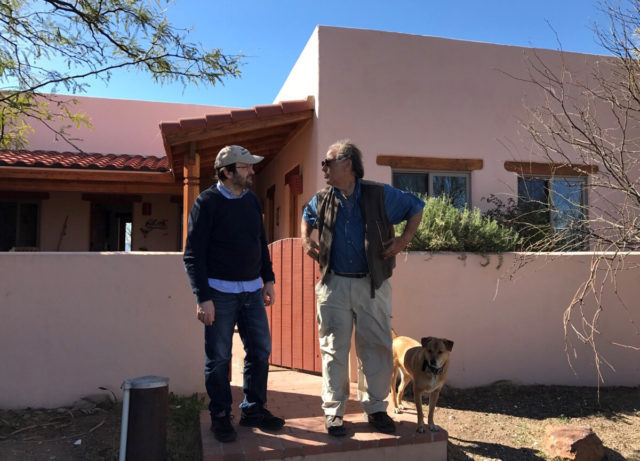
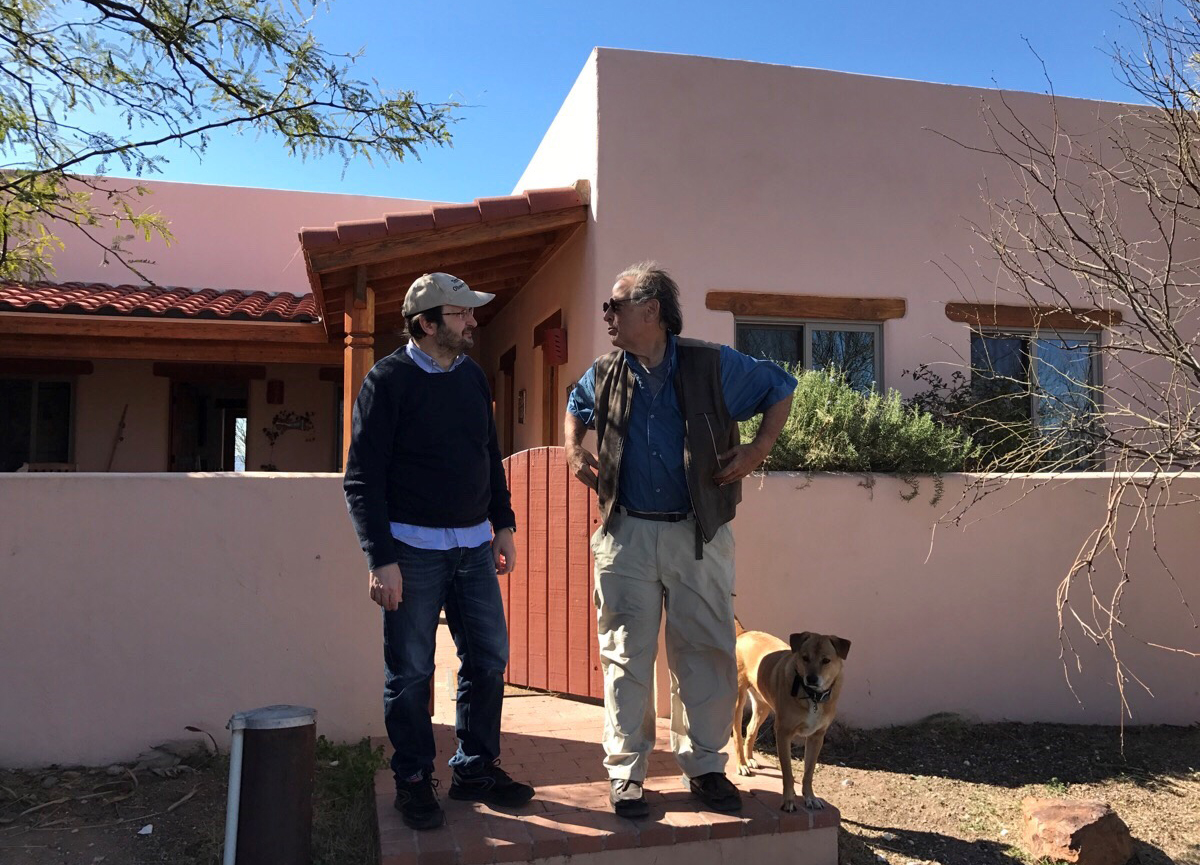
Gianluca Masi (left) and Michael Schwartz (right) at Tenagra Observatories
Tenagra Observatories, Ltd., invented internet based Astronomy late in the ‘90s. It was founded by Michael Schwartzwho wanted no less than a system able to capture valuable scientific data under the stars while sleeping and enjoying his many other areas of interest.  Soon, Tenagra Observatories became the most efficient, fully robotic astronomical facility on the planet and its telescopes were regularly and intensively used by the most important scientific Institutions in the world.
The first Tenagra Observatory was officially dedicated in the Spring of 1995 in Cottage Grove, Oregon, USA and continues to operate at the time of this writing with much larger facilities near Patagonia, Arizona.  The director and prime mover is still Michael Schwartz.
Michael has given many public lectures, has been featured in a DVD produced by Space.com, has traveled all over the world to major and historical observatories, has hosted professional astronomers from all over the world, has written for Sky & Telescope among many local Arizona outreach endeavours.  Michael has also met with Carl Sagan and Neil de Grasse Tyson.  He is a charter member of The Planetary Society created by Dr. Sagan.
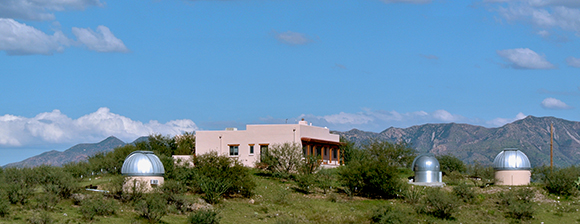
Tenagra Observatories in Arizona
The Magic:  Not only internet accessibility to professionals and high end amateurs, but unattended batch processing, a most challenging task still not used in many of the world’s largest professional observatories.  This means pre-night scheduling to optimize observations in an intelligent manner.
It is impossible to cover the ground breaking scientific work and the many discoveries done at the now legendary Tenagra Observatories, ranging from supernovae to gamma-ray bursts, from near-Earth objects to comets.
As of January 1, 2015, Michael Schwartz and collaborators began work exclusively under the NASA grant #NNX15AE89G for a period of 3 years.  Tenagra’s NASA mandate is to track and recover near-Earth asteroids (NEOs), making Tenagra Observatories, Ltd., a major player in the world of NEO tracking but also the best installation in the world for finding NEOs as they come around to visit the Earth a second time.  They may miss us the first time after discovery, but they may hit the Earth when they visit the second time.
The Virtual Telescope Project, founded by astrophysicist Gianluca Masi, started its current scientific endeavours in 2006, offering to the world a never-seen before experience: exploring the Cosmos in real-time, sharing live images on the web, with a live commentary by a professional astrophysicist skilled in science communication and chats to meet and discuss with him and all those joining the journey.
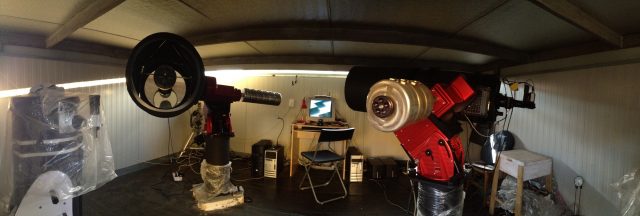
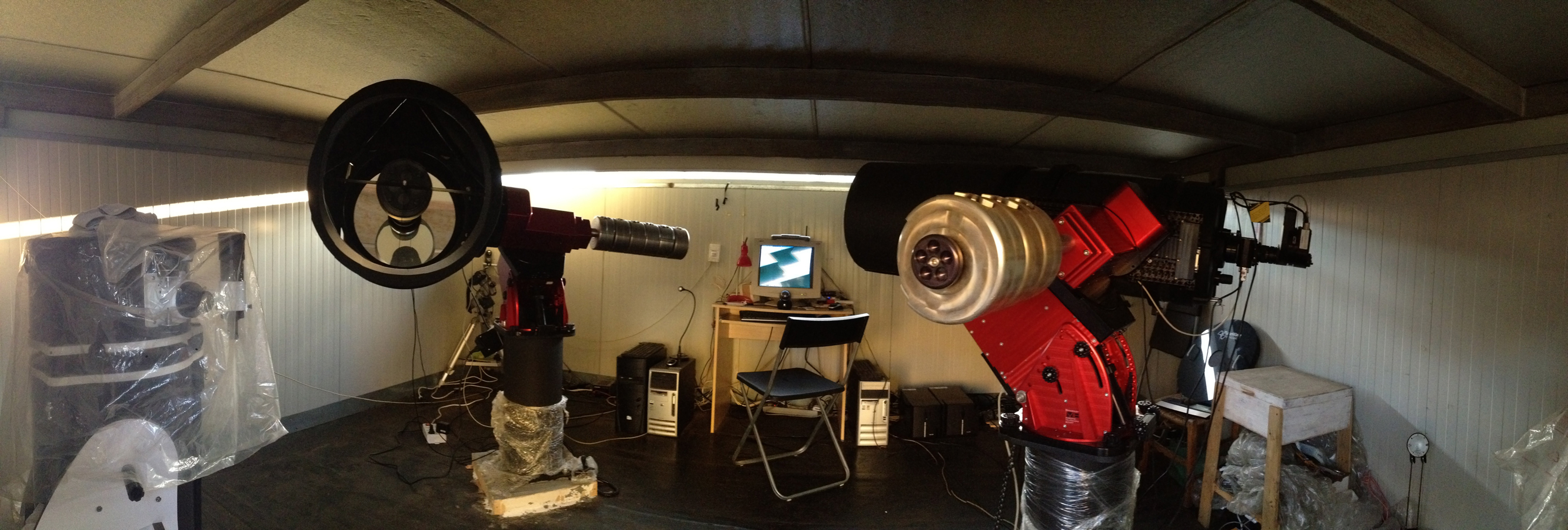
The telescopes used as part of the Virtual Telescope Project
Initially, its fully robotic telescopes were intended to support Gianluca Masi’s observing needs for his own researches, spanning from asteroids to cataclysmic variable stars and exoplanets, eliminating the need for the scientist to travel back and forth from the observatory. Soon after he recognized the potential of a powerful telescope connected to the internet, able to share the beauty of the Cosmos with the public in real time, with the bonus of a live commentary from himself. This made history.
Gianluca’s endeavours over the years, thanks to a lot of science and discoveries (from asteroids to exoplanets and cataclysmic variable stars) and many memorable live webcasts sharing the most impressive astronomical events with the world (such as NEOs, comets, eclipses, cosmic cruises), made possible for the Virtual Telescope Project to gain a world-wide reputation. It contributed to every medium on the planet:  Newspapers, Magazines, public speaking, television, radio and the internet.  On the internet, millions of people from virtually every Country on the globe, had a chance to explore the Cosmos in real-time, via Gianluca’s live webcasts.
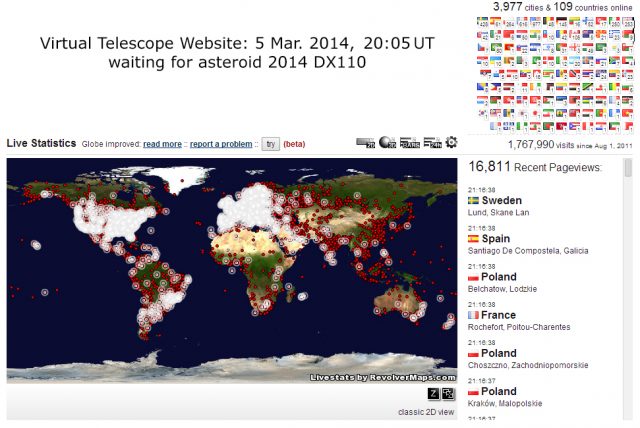
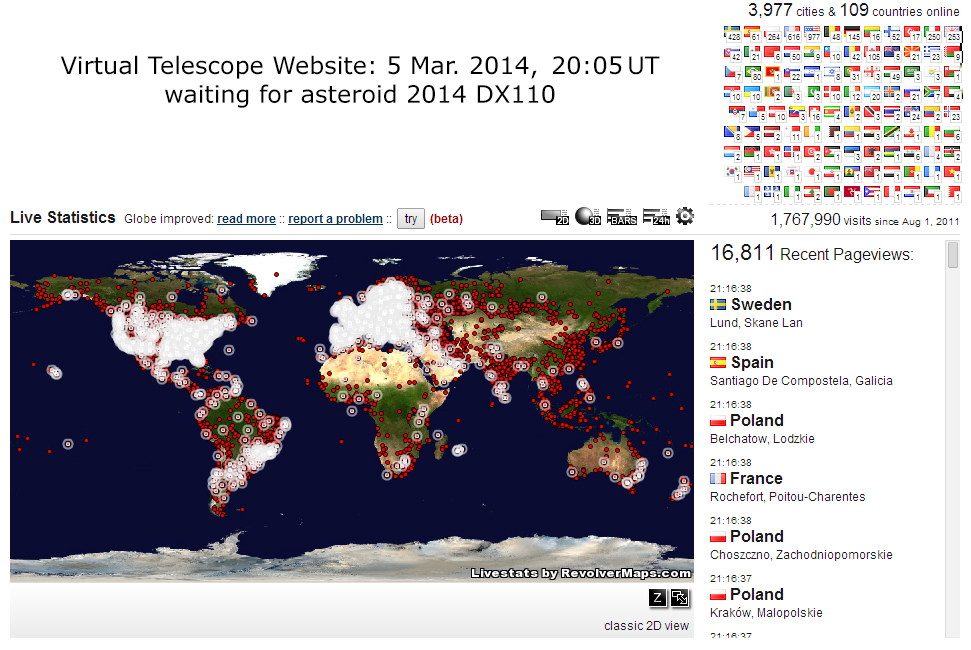
Asteroid 2014 DX110 event: almost ready to go!
A state-of-the-art technological heart and a very passionate soul helped the Virtual Telescope to win one of the hardest tasks for a scientist: running a highly respected scientific project, doing at the same time first rate public outreach, becoming the leader of the field. All this running thanks to a single person, with no funds, surviving thanks to donations. History says how greatly it worked and now it is time to expand this and make something unique again.
In “everyday life” (if such a thing exists for either of them!), Michael Schwartz and Gianluca Masi have been the best of friends for more than 15 years, sharing philosophies, arts and visions of the future as wells as visits by both to each other’s facilities.  Both consider themselves to be “citizens of the world” along with dedicated translators of the Cosmos to a public hungry to learn.
Only the First Step
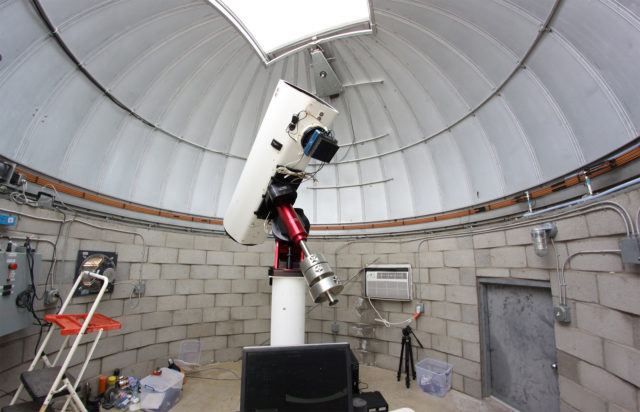
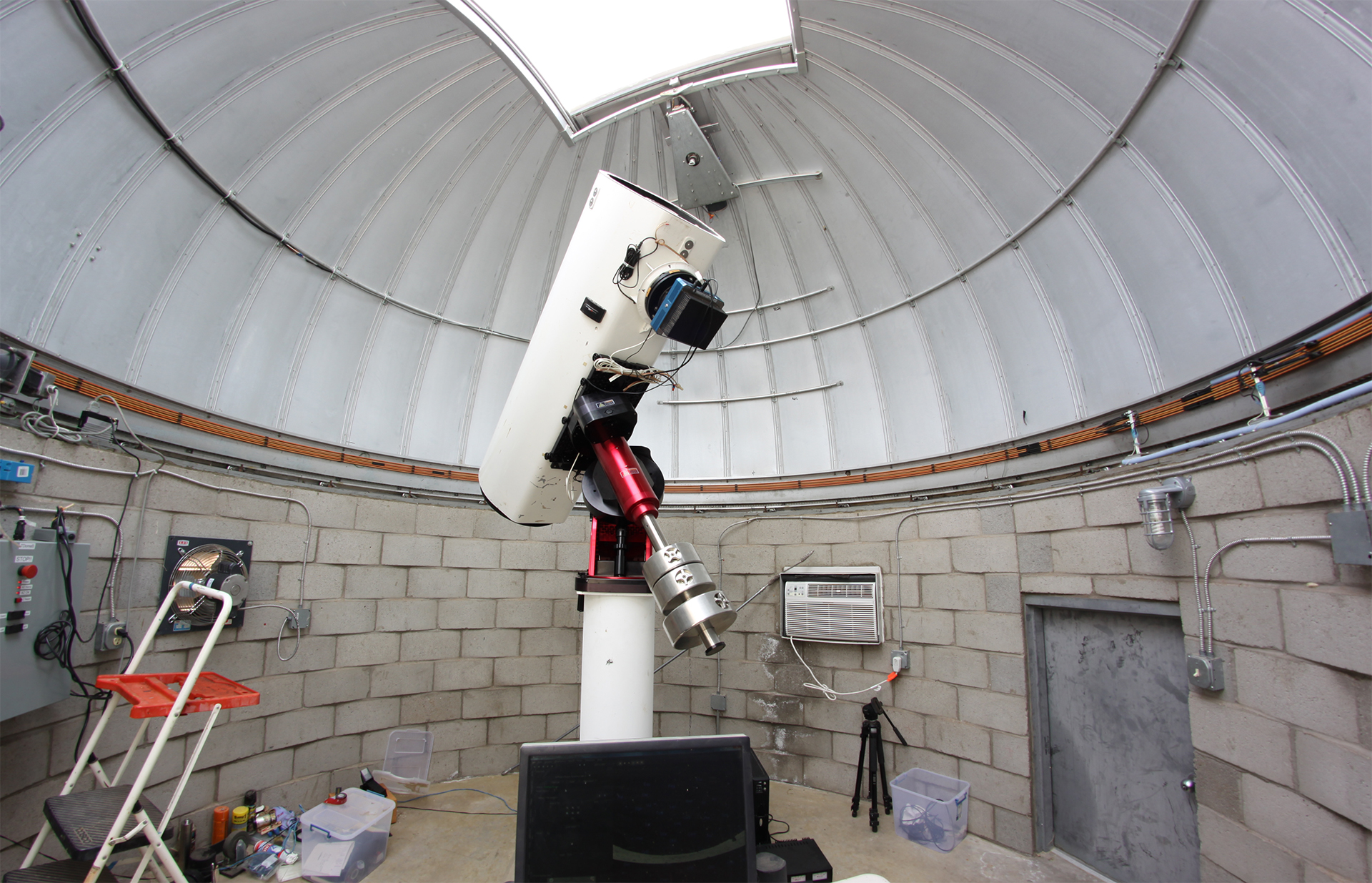
The Tenagra III ("Pearl") robotic unit available at Tenagra Observatories
The Tenagra III (“Pearl”) robotic unit available at Tenagra Observatories
Michael Schwartz has granted Gianluca 100% exclusive usage of his 16” robotic unit, named “Pearl”, in Arizona. This cooperation between Tenagra Observatories, Ltd., and the Virtual Telescope Project, both highly respected worldwide, will set a new standard in offering astronomical knowledge and online science outreach. The difference in time zone (8 hours) offers a unique opportunity:  the real-time observation of the American night sky during the daily, rush hours of Europe.
“It is for me a unique pleasure to work with a scientist and a good friend like Michael Schwartz”, Gianluca Masi said. “I’ve been looking at Tenagra Observatories and Michael’s work as a symbol of excellence for years and having it supporting now the Virtual Telescope is more than a dream coming to be: it is so exciting!”
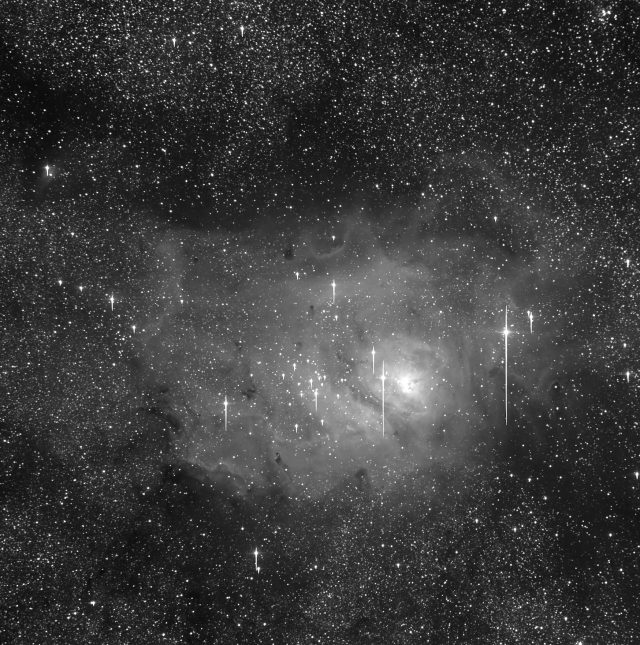
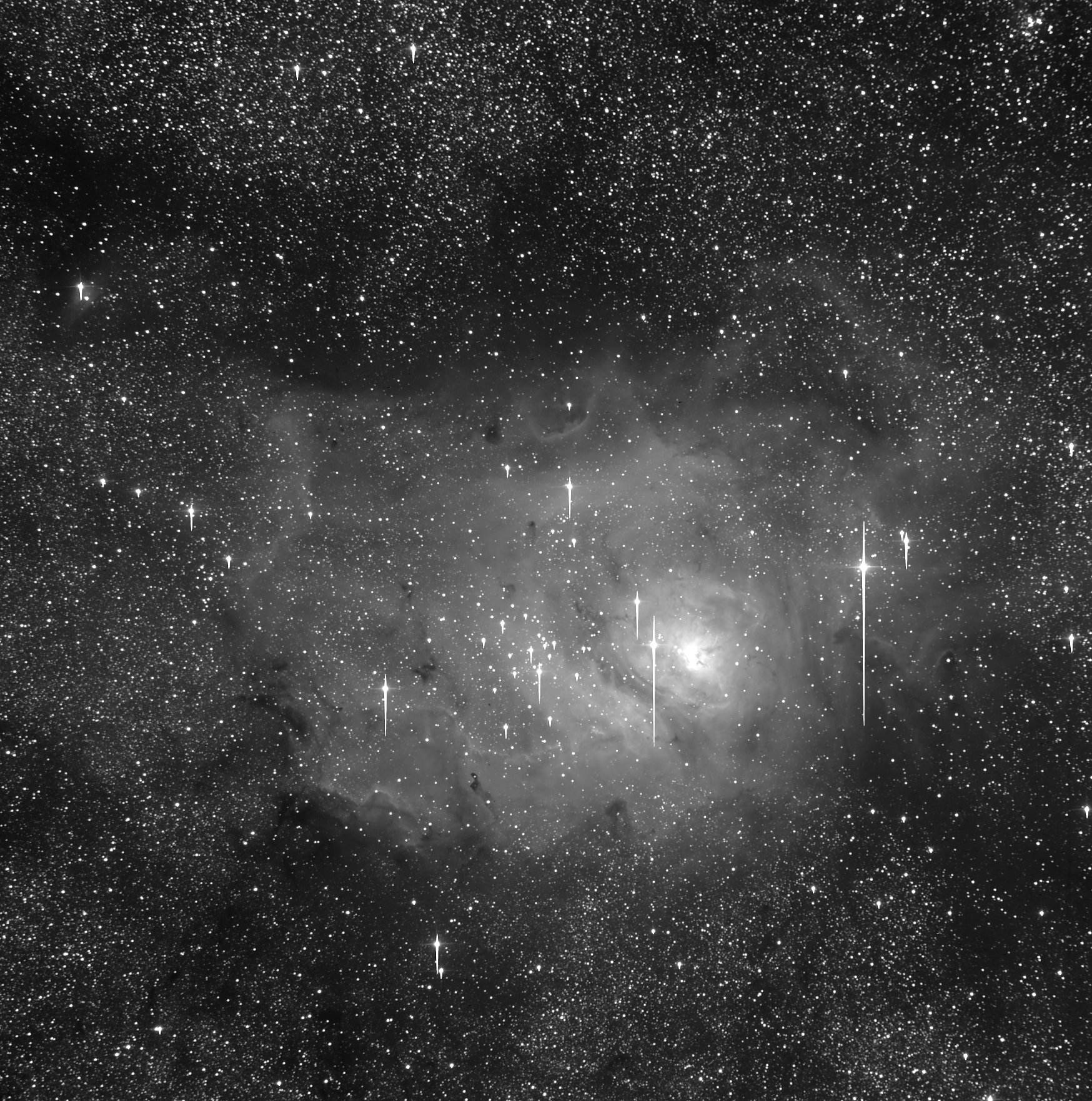
Messier 8, the "Lagoon" nebula, imaged with the 16" telescope at Tenagra Observatories
Messier 8, the “Lagoon” nebula, imaged with the 16″ telescope at Tenagra Observatories
“Having access to a high-tech telescope in the dark skies of Arizona, which has discovered 11 comets and many near-Earth asteroids, at more than 1300 meters above the sea level, in the Sonoran desert, will offer simply unique imaging opportunities and this will enrich a lot the outreach offer which made the Virtual Telescope Project the leading facility for public, real-time, online astronomical observations”, Masi adds.
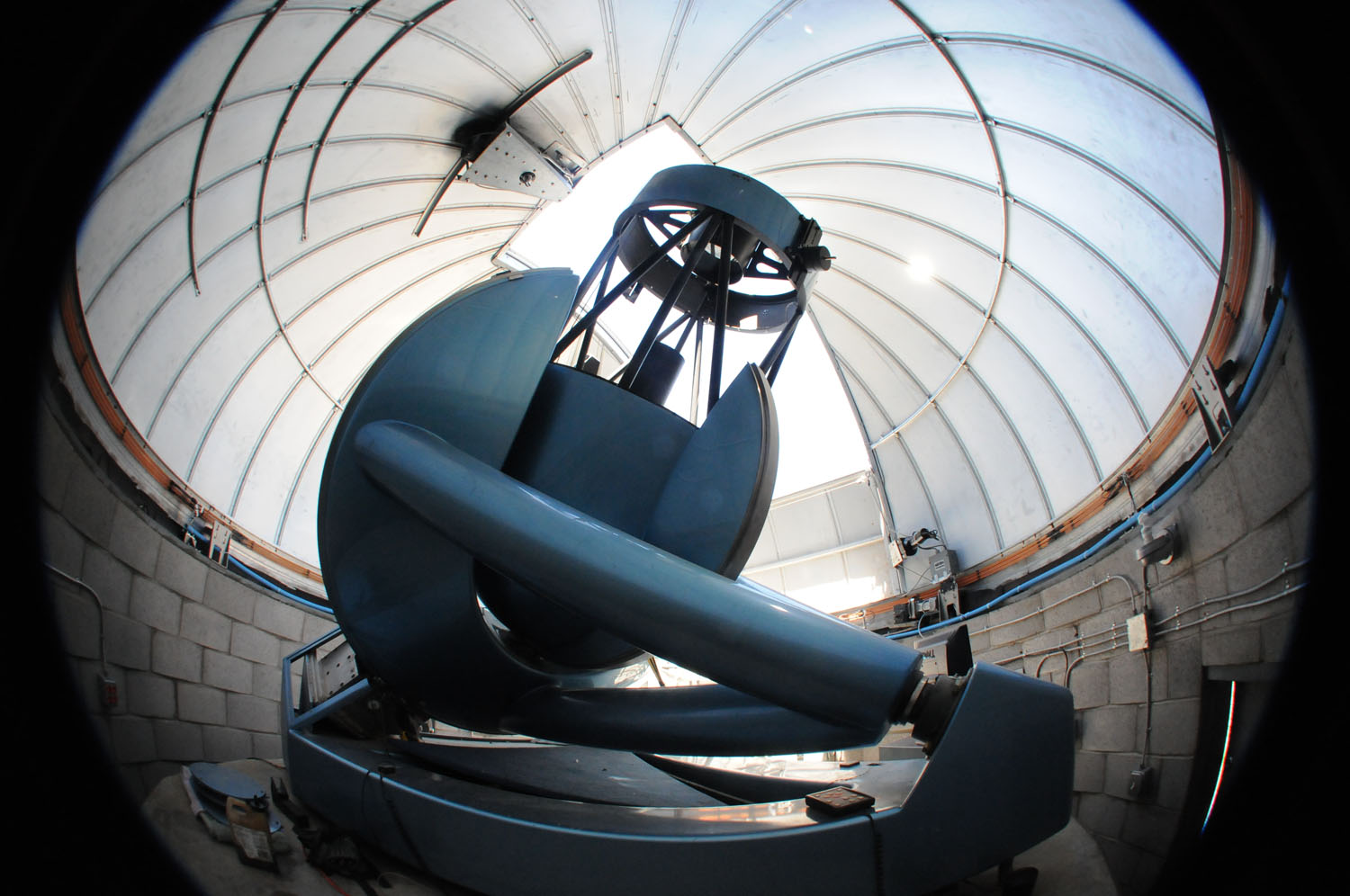
Beginning February, 2018 Tenagra Observatories will add its 32” fully automated telescope to this joint venture.  This is also fully robotic and will allow for the most serious of astronomical research and be able to capture astronomical phenomenon to those that are very dim, but even more revealing about the secrets of the Cosmos.
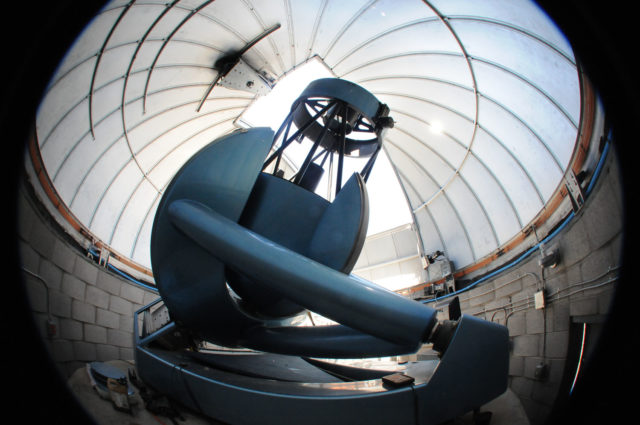
"Big Blue", the 32" robotic telescope joining early next 2018
“Big Blue”, the 32″ robotic telescope joining early next 2018
This joint adventure connecting Tenagra Observatories and the Virtual Telescope Project is one of the most interesting news in the astronomical arena for research and public outreach in the 21rst century.  We invite the world to join us on this wonderful adventure and the meeting of two people who are citizens of the Cosmos, not only citizens of world.

*** To celebrate this partnership, next 16 June, starting at 09:30 UT we will offer a stunning online, live observing session. During the live feed, we will announce the calendar of the future webcasts involving the telescope in the US. ***

Contacts:
Michael Schwartz – Tenagra Observatories, Ltd.

Gianluca Masi – The Virtual Telescope Project
Support The Virtual Telescope Project!
If everyone reading this right now would donate something, our fundraiser would be done in a few days. Please, donate and receive an exclusive, LIMITED EDITION image of potentially hazardous asteroids taken by the Virtual Telescope, specifically made for supporters like you!

segunda-feira, 12 de junho de 2017

Imagem mostra a lua Mimas do polo norte de Saturno

Da Revista Galileu


O satélite Mimas visto do polo norte de Saturno (Foto: NASA/JPL-Caltech/Space Science Institute)
Apoucos meses do fim da missão, a sonda Cassini da NASA continua coletando dados em sua viagem pelo espaço. No fim de março, a 993 mil quilômetros de distância de Saturno, ela registrou esta imagem do polo norte do planeta com uma de suas luas, Mimas (aquele pontinho no canto superior), ao fundo.
Mimas é um dos vários satélites que orbitam Saturno. Com 397,2 quilômetros de diâmetro, a lua é gelada e tem um período orbital de 22 horas. Assim como outros objetos do Sistema Solar, seu nome é uma homenagem à mitologia grega: de acordo com a história, Mimas foi um dos titãs que lutou ao lado de Cronos contra Zeus.  
Apesar de ter um tamanho considerável, a lua não é tão grande quanto as maiores do Sistema Solar. No caso das que orbitam Saturno, Titã é a que ganha mais destaque, tanto por sua dimensão quanto pela possibilidade de abrigar água e, logo, vida como não a conhecemos.
Missão Cassini
A viagem da sonda está a alguns meses de acabar. Após 12 anos no espaço, Cassini deu início a uma série de voos finais pela região inexplorada dos mais de 2,4 mil quilômetros que separam Saturno de seus anéis. Serão 22 voos no total — o primeiro ocorreu no fim de abril — até que, sob o comando dos engenheiros da NASA, ela acabe sua jornada ao se jogar na atmosfera do gigante gasoso, o que a fará queimar.
No fim da jornada, os cientistas esperam que a sonda colete informações que os ajudem a compreender melhor a estrutura interneta do planeta e a origem de seus anéis. "O que aprendermos com as audaciosas órbitas finais da Cassini vai aprofundar nossa compreensão de como os planetas gigantes e os sistemas planetários em toda parte se formam e evoluem. Isso é verdadeiramente descoberta em ação até o fim", diz Thomas Zurbuchen, da administração da NASA em Washington.


Estrelas semelhantes ao Sol abrigariam ingredientes para a vida

Da Revista Galileu


Molécula foi detectada em um conjunto de estrelas jovens  (Foto: Divulgação/ESO)
Uma oportunidade de descobrir como a vida começou na Terra. Duas equipes de astronômos localizaram rastros da presença de uma molécula orgânica complexa, chamada de isocianato de metila, em um sistema estelar localizado a 400 anos luz de distância e conhecido como IRAS 16293-2422. Esse tipo de estrutura orgânica é considerada um dos ingredientes químicos básicos para a formação da vida.

De acordo com os cientistas, essa é a primeira vez que moléculas desse tipo são localizadas em estrelas jovens: esse sistema estelar é considerado muito jovem e tem características semelhantes ao nosso Sol. Nas detecções, o gás de isocianato de metila rodeia as estrelas. 

A descoberta foi possível graças à precisão dos equipamentos que compõem o observatório ALMA, localizado no Deserto do Atacama, no Chile. Para detectar a molécula, os pesquisadores analisaram os espectros de ondas de rádio, graças ao conjunto de antenas de grandes dimensões que equipam o observatório. 

Como o Sistema Solar se formou a partir do material deixado durante o desenvolvimento do Sol, os astrônomos acreditam que a análise desse conjunto de jovens estrelas fornecerá mais informações para entender a origem de nossa vizinhança espacial. 

Estrelas semelhantes ao Sol abrigariam ingredientes para a vida

Da Revista Galileu


Uma oportunidade de descobrir como a vida começou na Terra. Duas equipes de astronômos localizaram rastros da presença de uma molécula orgânica complexa, chamada de isocianato de metila, em um sistema estelar localizado a 400 anos luz de distância e conhecido como IRAS 16293-2422. Esse tipo de estrutura orgânica é considerada um dos ingredientes químicos básicos para a formação da vida.

De acordo com os cientistas, essa é a primeira vez que moléculas desse tipo são localizadas em estrelas jovens: esse sistema estelar é considerado muito jovem e tem características semelhantes ao nosso Sol. Nas detecções, o gás de isocianato de metila rodeia as estrelas. 

A descoberta foi possível graças à precisão dos equipamentos que compõem o observatório ALMA, localizado no Deserto do Atacama, no Chile. Para detectar a molécula, os pesquisadores analisaram os espectros de ondas de rádio, graças ao conjunto de antenas de grandes dimensões que equipam o observatório. 

Leia mais:
+ O Guia Básico da Astronomia Amadora
+ 9 sites e canais para estudar Astronomia
Como o Sistema Solar se formou a partir do material deixado durante o desenvolvimento do Sol, os astrônomos acreditam que a análise desse conjunto de jovens estrelas fornecerá mais informações para entender a origem de nossa vizinhança espacial. 

Índios norte-americanos produziam miçangas feitas com metal de meteoro

Da Revista Galileu


  (Foto: Divulgação/Tim McCoy)
Estudo realizado no Departamento de Ciências Minerais do Museu Nacional de História Natural do Smithsonian, nos Estados Unidos, mostrou que índios norte-americanos produziam miçangas feitas de rocha do espaço há mais de 2.000 anos. Os objetos analisados foram feitos por nativos da cultura Hopewell e tinham seu material retirado do meteoro Anoka.

Os artesanatos foram encontradas em 1945, em um cemitério Hopewell em Havana, no estado americano de Illinois.Na época foram coletados 24 objetos, mas agora o Smithsonian possui apenas dois artefatos em sua posse.
Tim McCoy, geologista do instituto norte-americano, conseguiu verificar que os objetos possuíam praticamente os mesmo níveis de ferro, níquel e fósforo, além de outros traços de estrutura iguais as do meteoro de Anoka. Nos 1970, os pesquisadores do Smithsonian acreditavam que as peças tinham similiaridades com outras rochas espaciais presentes no museu, mas a tecnologia de análise não era avançada o bastante para confirmar as suspeitas. 
O cientista acredita que os fragmentos do meteoro chegaram até os indígenas por meio do Rio Mississipi: pedaços da rocha foram encontrados próximos ao seu leito. O mineral era de fácil manuseio quando esquentado próximo a uma fogueira. A partir de agora, o objetivo é descobrir se outros objetos da mesma época das miçangas também tiveram seu metal vindo do espaço. 
(com informações de Smithsonian)

quarta-feira, 19 de abril de 2017

Cientistas descobrem super-Terra considerada promissora para a busca de sinais de vida

Exoplaneta LHS 1140b gira em torno de estrela a 39 anos-luz.


Ilustração mostra a estrela LHS 1140 e seu exoplaneta LHS 1140b (Foto: M. Weiss/CfA)
A última edição da revista “Nature” apresenta a descoberta de LHS 1140b, um planeta que circunda a estrela LHS1140, na constelação de Cetus, a 39 anos-luz de distância do nosso Sistema Solar, e apresenta características que o tornam um forte candidato para que os cientistas o explorem mais detalhadamente atrás de evidências de vida extraterrestre.
A órbita do planeta é vista praticamente de perfil aqui da Terra e os cientistas são capazes de analisar detalhes de sua composição quando ele passa em frente à LHS1140, bloqueando um pouco de sua luz, o que acontece a cada 25 dias.
Para a existência de vida da forma como nós a conhecemos, um planeta deve ter água líquida na superfície e manter uma atmosfera. O planeta LHS1140b está no meio da chamada “zona habitável” de sua estrela, onde é possível existir água líquida.
A LHS 1140 é uma anã vermelha, menor e mais fria do que o nosso Sol. Assim, embora o LHS 1140b esteja dez vezes mais próximo da sua estrela do que a Terra do Sol, ele recebe apenas metade da luz solar que recebemos aqui. Quando estrelas vermelhas anãs são jovens, elas emitem uma radiação que pode ser prejudicial para as atmosferas dos planetas que as orbitam. Mas, no caso da LHS1140, sua radiação é menor que a de outras estrelas de pouca massa.

Maior que Terra

Os astrônomos estimam que a idade do planeta deve ser de pelo menos 5 bilhões de anos. Eles também concluíram que ele tem um diâmetro 1,4 vez maior do que o da Terra - quase 18 mil quilômetros. Mas com uma massa em torno de sete vezes maior que a Terra e, portanto, uma densidade muito maior, isso implica que o exoplaneta é provavelmente feito de rocha, com um núcleo de denso de ferro.
O tamanho grande do planeta significa que ele pode ter tido um oceano de magma fervente em sua superfície por milhões de anos. Este mar fervente de lava poderia produzir vapor para a atmosfera muito tempo depois que a estrela perdeu brilho, reabastecendo a superfície do planeta com água.
Para os autores, esta super-Terra pode ser o melhor candidato para futuras observações para estudar e caracterizar sua atmosfera, se ela de fato existir. "É o exoplaneta mais emocionante que vi na última década," disse o autor principal Jason Dittmann do Centro Harvard-Smithsonian de Astrofísica. "Dificilmente poderíamos esperar um alvo melhor para realizar uma das maiores procuras da ciência - buscar evidências de vida além da Terra".
"As condições atuais da anã vermelha são particularmente favoráveis - a LHS 1140 gira mais lentamente e emite menos radiação de alta energia do que outras estrelas similares de baixa massa", explica outro membro da equipe, Nicola Astudillo-Defru, do Observatório de Genebra, na Suíça.

www.g1.globo.com

The Arrhythmic Beating of a Black Hole Heart


At the center of the Centaurus galaxy cluster, there is a large elliptical galaxy called NGC 4696. Deeper still, there is a supermassive black hole buried within the core of this galaxy.
New data from NASA’s Chandra X-ray Observatory and other telescopes has revealed details about this giant black hole, located some 145 million light years from Earth. Although the black hole itself is undetected, astronomers are learning about the impact it has on the galaxy it inhabits and the larger cluster around it.
In some ways, this black hole resembles a beating heart that pumps blood outward into the body via the arteries. Likewise, a black hole can inject material and energy into its host galaxy and beyond.
By examining the details of the X-ray data from Chandra, scientists have found evidence for repeated bursts of energetic particles in jets generated by the supermassive black hole at the center of NGC 4696. These bursts create vast cavities in the hot gas that fills the space between the galaxies in the cluster. The bursts also create shock waves, akin to sonic booms produced by high-speed airplanes, which travel tens of thousands of light years across the cluster.
This composite image contains X-ray data from Chandra (red) that reveals the hot gas in the cluster, and radio data from the NSF's Karl G. Jansky Very Large Array (blue) that shows high-energy particles produced by the black hole-powered jets. Visible light data from the Hubble Space Telescope (green) show galaxies in the cluster as well as galaxies and stars outside the cluster.
Astronomers employed special processing to the X-ray data to emphasize nine cavities visible in the hot gas. These cavities are labeled A through I in an additional image, and the location of the black hole is labeled with a cross. The cavities that formed most recently are located nearest to the black hole, in particular the ones labeled A and B.
The researchers estimate that these black hole bursts, or “beats”, have occurred every five to ten million years. Besides the vastly differing time scales, these beats also differ from typical human heartbeats in not occurring at particularly regular intervals.
A different type of processing of the X-ray data reveals a sequence of curved and approximately equally spaced features in the hot gas. These may be caused by sound waves generated by the black hole’s repeated bursts. In a galaxy cluster, the hot gas that fills the cluster enables sound waves – albeit at frequencies far too low for the human hear to detect – to propagate.
The features in the Centaurus Cluster are similar to the ripples seen in the Perseus cluster of galaxies. The pitch of the sound in Centaurus is extremely deep, corresponding to a discordant sound about 56 octaves below the notes near middle C. This corresponds to a slightly higher (by about one octave) pitch than the sound in Perseus. Alternative explanations for these curved features include the effects of turbulence or magnetic fields.
The black hole bursts also appear to have lifted up gas that has been enriched in elements generated in supernova explosions. The authors of the study of the Centaurus cluster created a map showing the density of elements heavier than hydrogen and helium. The brighter colors in the map show regions with the highest density of heavy elements and the darker colors show regions with a lower density of heavy elements. Therefore, regions with the highest density of heavy elements are located to the right of the black hole. A lower density of heavy elements near the black hole is consistent with the idea that enriched gas has been lifted out of the cluster’s center by bursting activity associated with the black hole. The energy produced by the black hole is also able to prevent the huge reservoir of hot gas from cooling. This has prevented large numbers of stars from forming in the gas.
A paper describing these results was published in the March 21st 2016 issue of the Monthly Notices of the Royal Astronomical Society and is available online. The first author is Jeremy Sanders from the Max Planck Institute for Extraterrestrial Physics in Garching, Germany.
NASA's Marshall Space Flight Center in Huntsville, Alabama, manages the Chandra program for NASA's Science Mission Directorate in Washington. The Smithsonian Astrophysical Observatory in Cambridge, Massachusetts, controls Chandra's science and flight operations.
For more Chandra images, multimedia and related materials, visit:

LinkWithin

Related Posts Plugin for WordPress, Blogger...